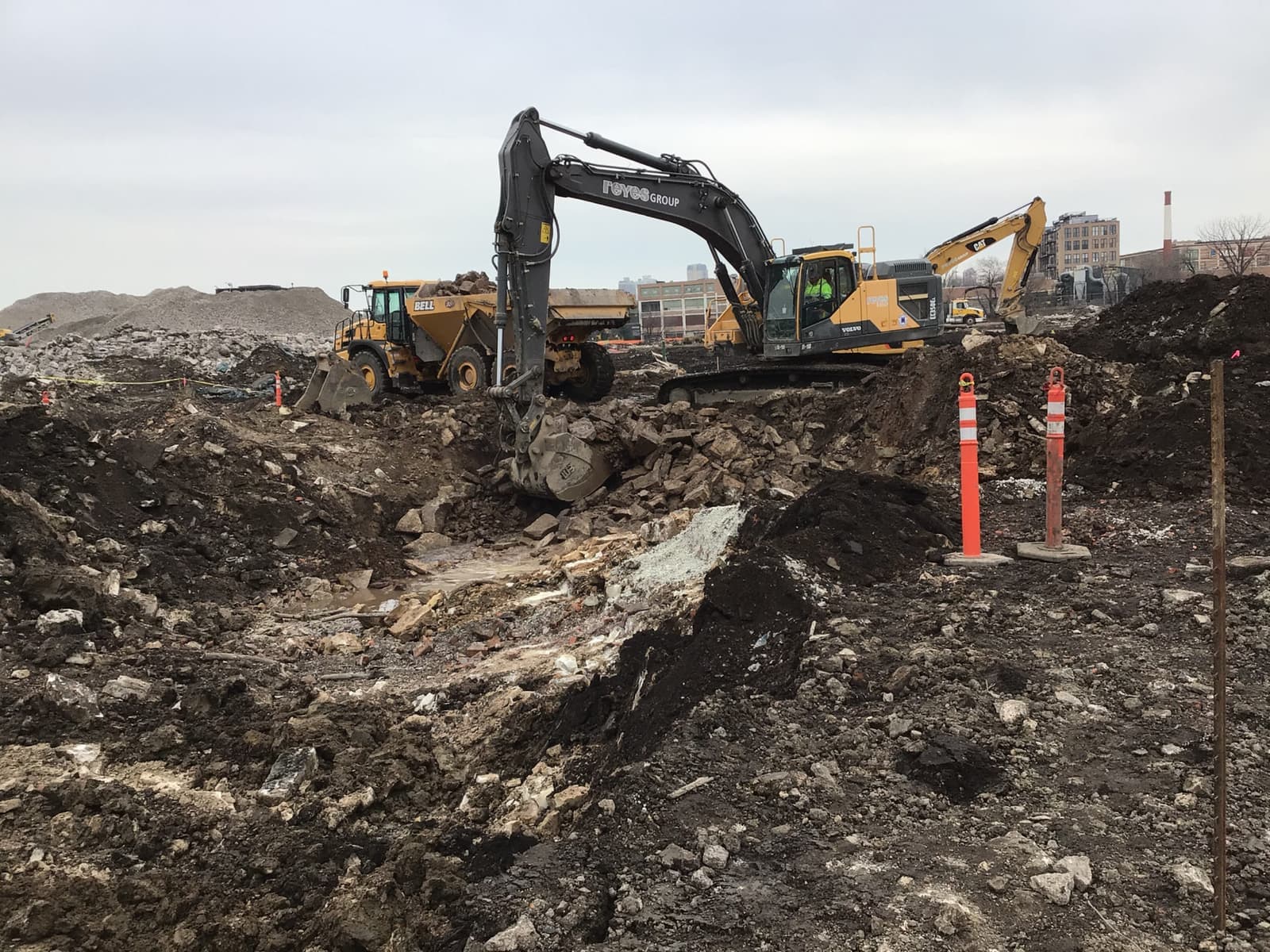
Site Preparation and Demolition in San Antonio, TX
Concrete Contractors of San Antonio manages site preparation and demolition for commercial and institutional clients across Bexar County and the wider San Antonio metro. San Antonio is the seventh-largest city in the United States — a market with the project volume and owner expectations that demand more than a generic trade-by-trade build approach. Concrete Contractors of San Antonio delivers site preparation and demolition scopes for commercial, institutional, and mixed-use projects across Bexar County. Selective demolition in San Antonio's active commercial corridors — Loop 410, Broadway, St. Mary's Street, and the Alamo Heights corridor — requires dust and vibration control that protects occupied neighbors and public-facing streetscape. Urban infill demolition near the River Walk and downtown requires coordination with COSA's historic review process when existing structures carry any historic designation. Site clearing on Hill Country limestone parcels near Helotes and Bulverde may require rock-break equipment and aggregate management plans that standard demolition contractors are not equipped to execute. We structure each assignment around the site, the permit path, and the specific market forces shaping the San Antonio concrete trade right now, not around a template built for a different city.
San Antonio's concrete demand is unusually diverse. Multi-generational Hispanic families commissioning decorative patios, casita slabs, and Saltillo-adjacent courtyards represent one segment. Premium estate concrete in Stone Oak, Sonterra, and Cordillera Ranch — cantera-stone adjacency with stamped and exposed-aggregate finish expectations — represents another. JBSA's four installations drive precision concrete for barracks pads, access roads, and utility aprons. USAA headquarters, Valero Energy's corporate campus, and the Pearl Brewery and River Walk adaptive-reuse district add commercial and historic-preservation scopes requiring different mix designs, finish standards, and phasing protocols. Understanding which category a project falls into — and planning accordingly — is how we avoid the mismatch between what an owner expects and what a generic concrete crew delivers.
Bexar County's geotech is not uniform. Hill Country limestone outcrops north of Loop 1604 near Helotes, Bulverde, and Fair Oaks Ranch mean shallow rock and different foundation approaches than the expansive clay active in the city's central and south sides. Glen Rose marl in the northwest metro compresses under load in ways that require engineered slab reinforcement calibrated for that specific formation. The Edwards Aquifer Authority's impermeable-cover restrictions on recharge zone sites add a regulatory dimension to concrete planning that doesn't apply in most Texas markets. We address all of that in preconstruction — when decisions are still inexpensive — not after the pour is in the ground.
START YOUR PROJECT